Table of Contents
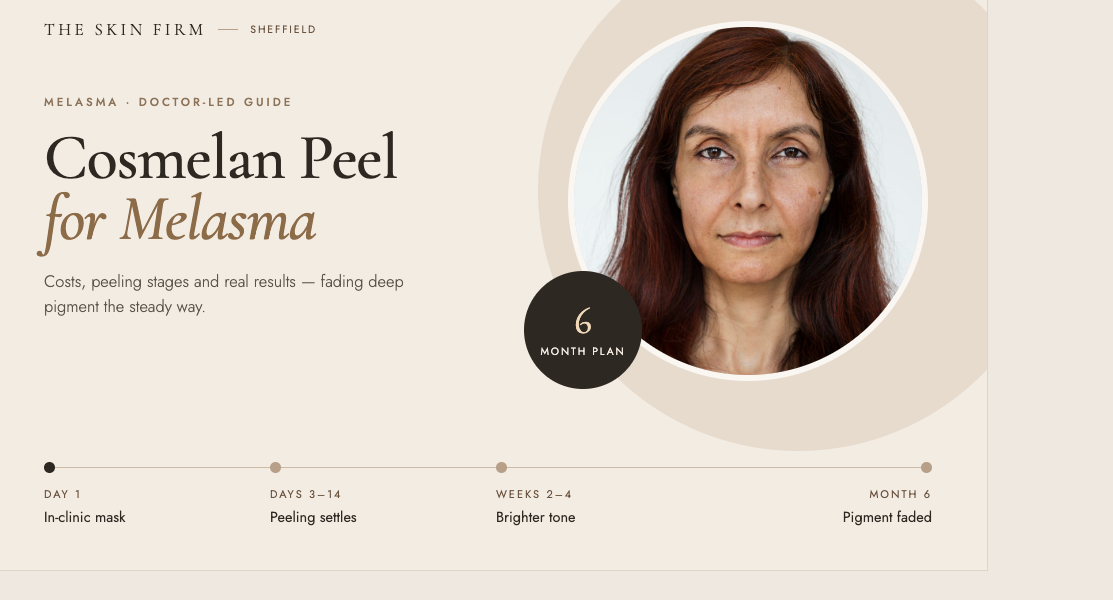
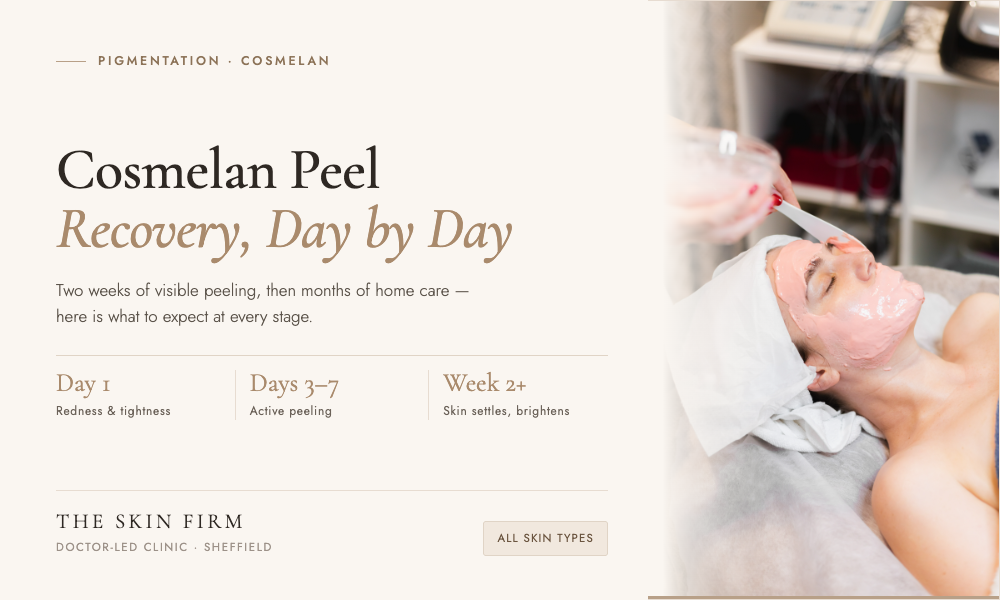
Typical Cosmelan peel recovery involves two weeks of visible peeling, followed by several months of at-home skin care. People tend to get used to performing routine activities quickly, although their skin continues to renew itself.
There are multiple stages of healing after the procedure. These are skin irritation and skin peeling, followed by skin smoothing due to decreased pigmentation.
This guide covers everything you need to know about the phases of peel recovery, including skin irritation and peeling. Find out how many days of shedding it takes, learn about possible side effects, and maintain your skin in top shape.
Key Takeaways
- The recovery period lasts up to two weeks, followed by a six-month home care period.
- Peeling normally begins after two or three days and lasts for seven days on average.
- Redness, tightness, dryness, and peeling are all symptoms that will go away in due time.
- Using sun protection is important to ensure the result and prevent relapse.
- Cosmelan is suitable for all skin types, and personal consultations are available to assess suitability.
How Long Does Cosmelan Take to Peel?
Peeling usually starts 2 to 3 days after treatment and lasts about 7 to 14 days. It tends to peak near day seven. Sensitive skin can keep flaking for up to three weeks.
The typical Cosmelan recovery period involves roughly two weeks of peeling, followed by months of home care. While most people can resume their daily activities after a short period, the recovery process is ongoing beneath the surface.
It begins in the clinic, where the practitioner applies the mask. You keep the mask on for the prescribed 8 to 12 hours, then remove it using lukewarm water.
The application period varies from one patient to another.
So the peeling does not begin straight away. The first day or two is mainly redness and tightness. The visible shedding follows once the mask has done its work.
Cosmelan Peeling Stages: Recovery Day by Day
The Cosmelan peeling stages follow a fairly predictable pattern. Most of the downtime from the Cosmelan peel occurs within the first two weeks, so it helps to plan around it.
Day 1: Redness and Tightness
- The skin often looks red and feels warm, a little like mild sunburn.
- Tightness and slight swelling are normal.
- A recovery cream, such as Melan Recovery, soothes the skin and eases dryness.
Days 2 to 3: Flaking Begins
- The skin starts to feel dry and tight.
- Light flaking usually appears first around the mouth, nose, and chin.
- Lighter skin types may notice flaking a little sooner.
Days 3 to 7: Active Peeling
- It is the peak of the peeling stage.
- The skin sheds in patches, sometimes unevenly, moving from the mouth towards the forehead.
- Mild itching, warmth, or stinging can come and go.
- Do not pick or pull the skin. Let it shed on its own to avoid marks and scarring.
Week 2: The Settling Stage
- Peeling slows down, and flaking subsides.
- Redness and irritation decrease.
- At this stage, many providers start using Cosmelan 2 homecare cream.
Weeks 3 to 6 and Beyond
- Your skin will appear calm, smooth, and even.
- Patients often see skin brightening effects early.
- Your provider could recommend a review or touch-up.
Finding it hard to fade stubborn melasma or dark patches at home?
A doctor-led consultation can confirm whether Cosmelan suits your skin type and explain what your recovery would realistically involve.
Cosmelan Peel Side Effects
Most Cosmelan peel side effects are mild, temporary, and simply part of the skin renewing itself. Common effects include:
- Redness and a flushed, warm feeling
- Tightness and dryness
- Flaking and peeling
- Mild itching or a light stinging sensation
- Short-term sensitivity to products and sunlight
These usually settle within two weeks as the skin recovers.
Some signs are not part of normal healing. Contact your provider promptly if you notice:
- Severe or spreading redness and swelling
- Blistering, or open and weeping skin
- Pain that gets worse rather than better
Cosmelan Peel Aftercare Tips
Good Cosmelan peel aftercare protects your skin and helps the results last. The basics are simple.
Things to do:
- Apply sunscreen lotion SPF 30 or higher every day, regardless of whether it is cloudy.
- Cleanse the face using a non-foaming cleanser and lukewarm water.
- Use the specified recovery cream as often as possible to combat dry skin.
- Drink lots of water.
- Allow the skin to shed naturally.
Things to refrain from:
- Avoid picking or rubbing the peeling skin off.
- Do not engage in any kind of physical activity that raises body temperature.
- Avoid exposing yourself to sun rays and tanning booths.
- Avoid using retinol, glycolic acid, and salicylic acid for a while.
- Do not use Cosmelan together with other depigmenting therapies.
Sun protection matters most of all. UV light is the main trigger for pigmentation, so daily SPF is what keeps dark patches from creeping back.
Want expert support through every stage of your recovery?
The medical team at The Skin Firm guides you from consultation through structured aftercare and review, looking after your skin at every step.
Cosmelan Peel Before and After: When Will You See Results?
The change in the Cosmelan peel treatment before and after occurs gradually rather than suddenly. Most patients notice a change in skin tone about three to four weeks after the procedure, while significant changes may be evident after two to three months.
The results depend entirely on skin type, the depth of the pigmentation and adherence to the instructions after the peel. The Cosmelan peel is known for effectively minimising conditions such as melasma, age spots, and post-inflammatory hyperpigmentation, although individual results may vary.
In addition, melasma is very stubborn. It tends to recur and will only stay gone with continued treatments.
Who Is Cosmelan Suitable For?
One of the biggest advantages of this peel is that it suits all skin tones, from very fair to deep. That is unusual for a pigmentation treatment, as many options carry a higher risk for darker skin.
It might not be appropriate for you if you:
- Are currently pregnant or breastfeeding
- Have cold sores or open wounds in that area
- Are using another form of treatment for depigmentation
A consultation with a qualified skin specialist is the only reliable way to confirm whether it is right for you. For milder pigmentation, your provider may instead suggest a course of chemical peels or microneedling, alongside medical-grade homecare.
Conclusion
In summary, the Cosmelan peel requires roughly two weeks of peeling and a few months of maintenance afterwards to preserve the achieved outcome. You will first experience inflammation and tension, then your skin will peel during the first week before it brightens and achieves a more uniform colour.
The most important thing to keep in mind regarding the proper peel recovery process is patience and appropriate aftercare. Daily sun protection, use of mild skincare products, and avoiding the temptation to pull off the flakes will yield better results than anything else. The pigmentation can recur, especially with melanoma.
If you are considering treatment for stubborn pigmentation, the team at The Skin Firm offers a doctor-led Cosmelan depigmentation programme in Sheffield, with structured aftercare and review at every stage.
Start Your Journey
Book Your Free Consultation Today
Frequently Asked Questions
When does peeling start after Cosmelan?
Skin starts peeling two or three days after the Cosmelan 1 mask application ends. This peel takes from eight to twelve hours.
Is Cosmelan peeling painful?
It is generally not uncomfortable; most patients experience tightness, dryness, mild itching, or stinging, similar to a mild sunburn. Recovery cream helps keep the skin comfortable.
Can you go to work during Cosmelan downtime?
Many people carry on with their daily lives, though their skin may look red and flaky in the first week. Some prefer to plan the treatment around a quieter week if visible peeling is a concern.
What should you avoid after a Cosmelan peel?
Do not pick at the skin, avoid exposure to heat, sunlight, or tanning beds, and avoid potent ingredients such as retinol and acids.
Is Cosmelan safe for darker skin tones?
Yes. It is one of the few depigmentation treatments considered suitable for all Fitzpatrick skin types, from fair to deep, when carried out by a trained practitioner.