Table of Contents
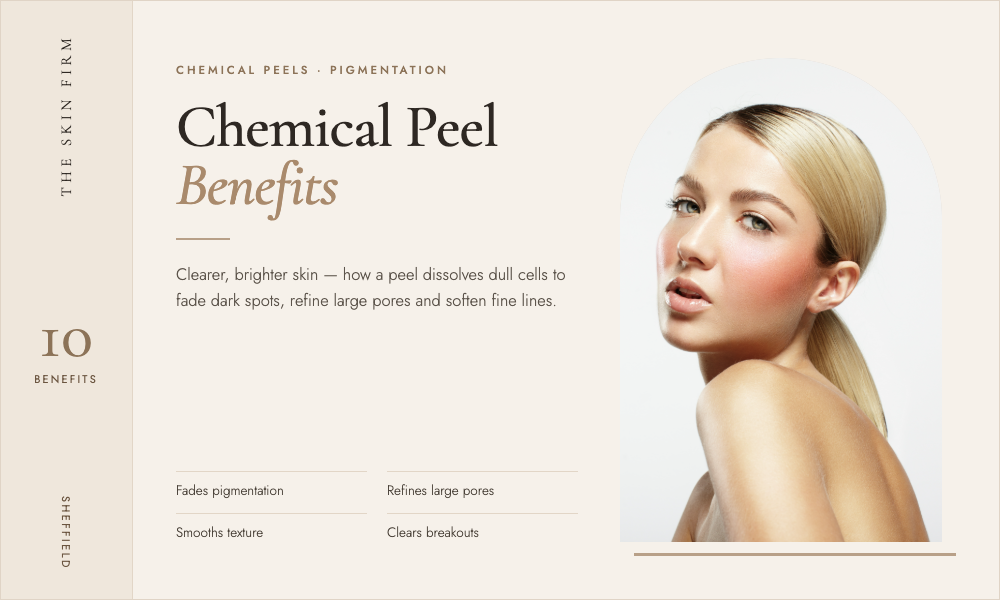
In a hyperpigmentation peel, a chemical treatment dissolves and removes the skin's epidermal layer. The result is a new, even layer of skin as the old skin flakes off. With repeated peels, uneven skin tone, patches, or other discolourations can become even.
Peels can manage superficial hyperpigmentation. If you have deeper or hormonal pigmentation, such as melasma, we must use a different treatment strategy.
This guide explains what a peel does, what causes pigmentation, and how to choose a safe, suitable treatment. It also covers what results to expect and how to protect your skin afterwards.
Key Takeaways
- Facial peels slough off skin pigment to reveal newer, healthier skin tones.
- Peels work best for mild or moderate pigmentation; however, melanin requires a tougher approach.
- Most clients will need to undergo a series of peels, not just one, to notice a significant improvement.
- Applying an effective sunblock daily helps prevent pigmentation from recurring.
Types of Facial Peel for Hyperpigmentation: Treatment Options at a Glance
The most effective facial peel depends entirely on how deep your pigmentation sits and how your skin naturally reacts to the treatment. Medical professionals use several distinct chemical options to safely target and fade different levels of skin discolouration.
| Peel Type | Treatment Option | Best For |
|---|---|---|
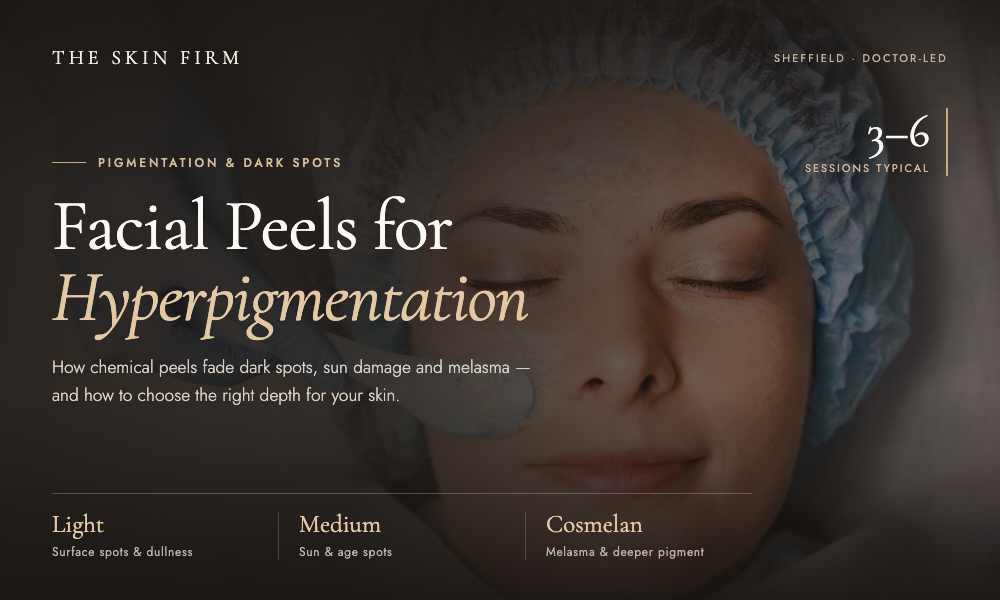
| Light Peels | Resurfacers / Light chemical peel | Surface pigmentation, skin dullness, and dark spots |
| Medium Peels | Medium chemical peel | Uneven skin tone or texture, prominent marks, sunspots, and age spots |
| Cosmelan | Depigmenting treatment | Melasma, photodamage, and deeper pigmentation issues |
| Combination Peels | Peeling with microneedling (SkinPen) & skincare | Tackling skin pigmentation effectively |
Signs and Symptoms of Hyperpigmentation
Pigmentation is easy to spot once you know what to look for. Common signs include:
- Flat brown, grey, or tan patches on the face
- Small dark spots from the sun (sun spots or age spots)
- Larger, blotchy patches linked to hormones (melasma)
- Dark marks left behind after spots or acne
- An overall uneven or dull tone that make-up struggles to hide
Not Sure Which Treatment Suits Your Skin?
A one-to-one skin assessment can pinpoint the cause of your pigmentation and match it to a safe, suitable plan.
How Does a Chemical Peel Work on Pigmentation?
A chemical peel for pigmentation works in a few simple steps:
- The practitioner cleanses your skin and applies the chemical solution.
- The acid loosens the bonds between old, pigmented skin cells.
- Over the next few days, this surface layer sheds away.
- Fresh skin forms underneath, with pigment spread more evenly.
- A short course builds on this to gradually fade marks.
Light peels may include a glycolic peel for pigmentation, an alpha-hydroxy acid that works at the superficial level of the epidermis. More powerful peelers, such as TCA, work much deeper and address tougher spots. However, whatever the peeler used, it should always be followed by proper sun protection.
Types of Peels and Treatment Options
The right option depends on how deep the pigmentation sits and how your skin reacts. Common routes include the following.
Light and Medium Peels
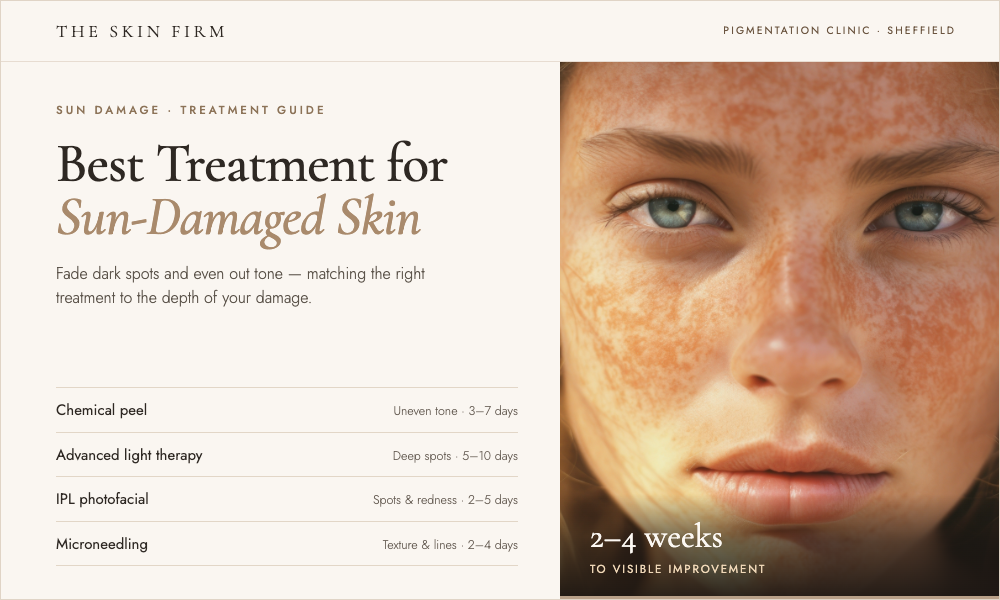
Light chemical peels, or resurfacers, offer a mild skin exfoliation with minimum recovery time. These treatments are good for surface pigmentation and skin dullness. Another frequent question concerns a chemical peel for dark spots and their effectiveness. If marks appear on the surface, several courses of a light or medium chemical peel will easily eliminate them.
If your primary concerns are uneven skin tone or texture and more prominent marks, a medium chemical peel might work just fine for you. Moreover, this type of treatment will effectively address any surface sunspots or age spots. There is no one-size-fits-all answer for the best chemical peel for hyperpigmentation, as the most effective solution depends on your skin tone and pigmentation pattern.
To treat pigmentation properly, most people need a course of three to six sessions rather than a one-off peel.
Cosmelan for Melasma and Deeper Pigmentation
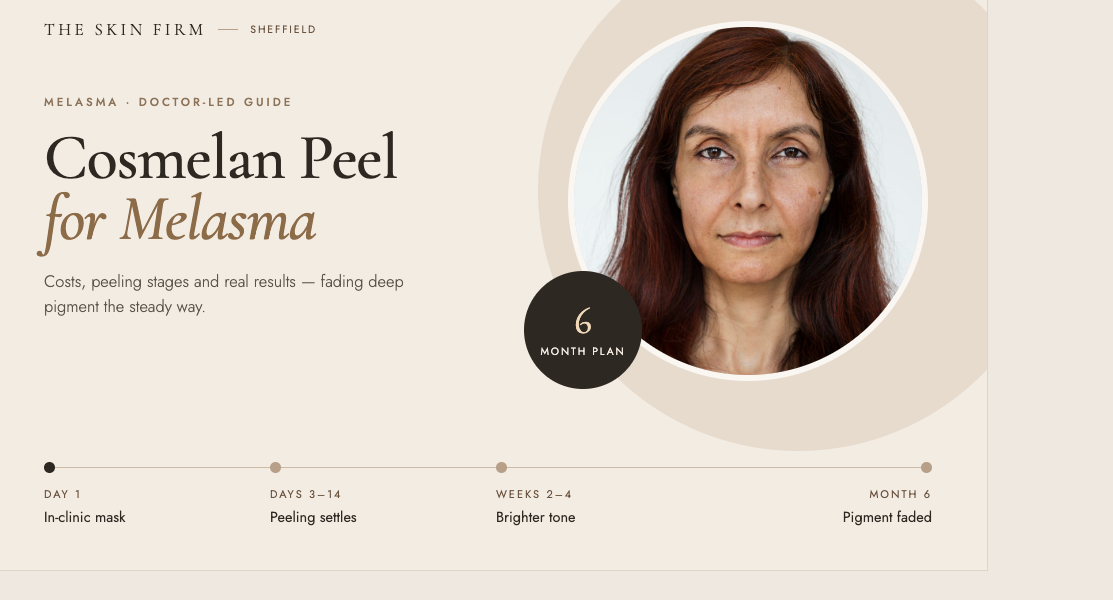
Some forms of pigmentation tend to go deeper into the skin or are more persistent. Melasma peels are a popular search term; however, because melasma is hormonally influenced and can recur, more intensive treatment is usually necessary.
Cosmelan is often more appropriate for melasma, photodamage, or deeper pigmentation issues, as a depigmenting treatment that involves several steps: a skin preparation phase, in-office mask application, and guided at-home maintenance for several months. The point is to control melanin production and skin colouring, and the treatment can be used on any skin type. Peeling, erythema, and dry skin during the first week of treatment are quite natural.
Combining Peels with Microneedling and Skincare
To tackle skin pigmentation, a combination of approaches is most effective. It could involve a microneedling procedure, such as SkinPen, as well as peeling. To ensure good results between clinic visits, medical-grade at-home care should be provided, including products from Obagi or AlumierMD.
Struggling With Stubborn Patches That Won't Fade?
The medical team at The Skin Firm can develop a tailored plan to safely target melasma and deeper pigmentation at the right pace.
Is a Facial Peel Safe? Risks and Who Should Take Care
A peel is generally safe when performed by a trained professional. Still, like any treatment, it carries some risks. Common, short-lived effects include:
- The appearance of redness, burning or mild stinging sensations on the day
- Mild scaling or peeling for a few days, particularly following medium-strength peels
- Temporary light sensitivity to the sun
Individuals with darker skin should choose their peel carefully, since an inappropriate peel may induce additional pigment formation. Practitioners generally advise against performing peels during pregnancy or lactation, or on open cold sores or broken skin.
How to Get the Best Results from a Peel
You can also do a couple of things to help your skin and make sure that the results last:
- Wear sunscreen every day.
- Keep out of the sun and avoid tanning beds during your recovery period.
- Skip harsh scrubs, retinoids, or acids for a few days after a peel, unless advised otherwise.
- Keep your skin well moisturised and do not pick any flaking skin.
- Finish the full course and home-care plan for the steadiest change.
Conclusion
Getting a peel to treat hyperpigmentation is a safe, effective treatment that will help lighten patches on your skin and achieve a smoother complexion. The treatment involves removing the affected outer layer of the skin, which helps reveal fresh skin underneath over several sessions.
However, the type of hyperpigmentation, skin type, and patient compliance with post-treatment instructions will determine the procedure's effectiveness. Chemical peels have been seen as a successful method for treating mild hyperpigmentation; on the other hand, deep and hormonal hyperpigmentation, such as melasma, need to be treated systematically.
The experienced team at The Skin Firm offers medical-led chemical peels in Sheffield to help fade pigmentation and restore a clearer, healthier-looking complexion.
Start Your Journey
Book Your Free Consultation Today
Frequently Asked Questions
Does a chemical peel work for dark spots?
Yes. Superficial discolourations can be faded with regular use of light- or medium-strength peels, while deeper and older discolourations will require a more robust treatment regimen. Sun protection is also necessary to prevent the discolourations from reappearing.
What is the best chemical peel for hyperpigmentation?
There is no one-size-fits-all answer. The best peel depends on your skin tone, the type of pigmentation, and how your skin reacts. A skin assessment helps match the safest, most effective option to your needs.
Can a chemical peel treat melasma?
A standard peel may help a little, but melasma is hormone-driven and stubborn. It usually responds better to a structured depigmentation programme, such as Cosmelan, carried out under medical supervision.
How many peels will I need to fade pigmentation?
Most people need a course of three to six sessions for a visible change, rather than a single peel. The exact number depends on the concern and how your skin responds.
Is a chemical peel safe for darker skin tones?
Yes. However, individuals with darker skin tones should choose their peels carefully to avoid further aggravation of hyperpigmentation. The Cosmelan treatment program is ideal for people of all skin tones.