Table of Contents
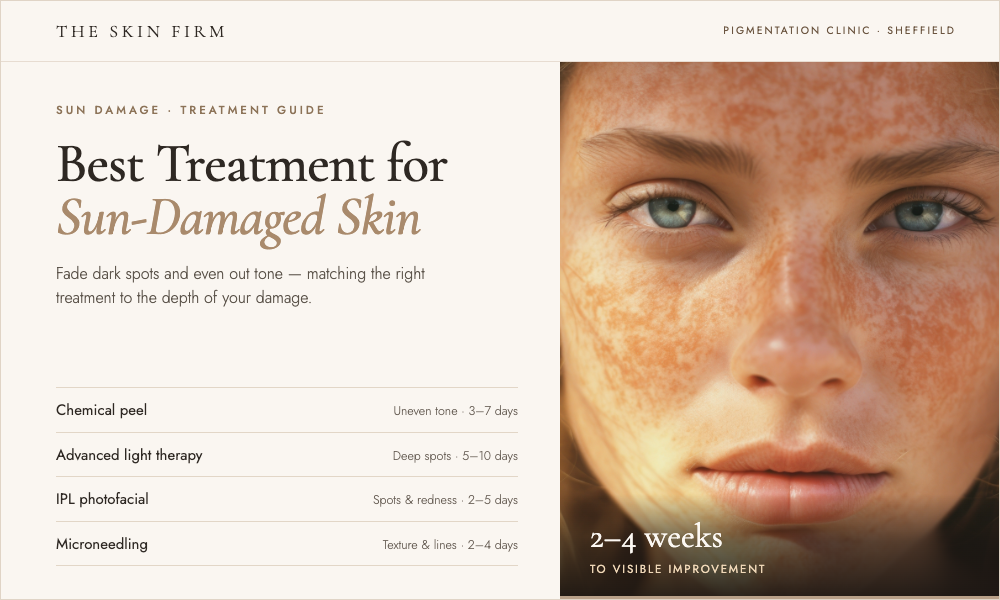
Effective treatment options for sun damage on the face include chemical peels, advanced light-based treatments, intense pulsed light, microdermabrasion, and microneedling, depending on the severity. Such procedures can correct the appearance of pigmentation, discolouration, and premature ageing caused by prolonged sun exposure.
Sun-damaged facial skin is one of the most common concerns at skin clinics. Whether it is dark patches, rough texture, or general dullness that has built up over time, the effects of UV exposure tend to worsen if left unaddressed. The good news is that modern skin treatments are highly effective, and the sooner you start, the better your results are likely to be.
Key Takeaways
- Chemical peels, IPL, and advanced light treatments can fade sun damage
- The right treatment depends on the type and severity of damage
- Most patients notice visible improvement within two to four weeks
- Daily SPF protects your results and prevents further damage
What Is Sun-Damaged Skin?
Sun-damaged skin happens when ultraviolet (UV) rays from the sun break down collagen, damage skin cells, and trigger the overproduction of melanin, the pigment that gives skin its colour. Over time, this leads to visible changes on the surface of your skin that become increasingly difficult to reverse without professional help.
UV rays come in two main forms: UVA and UVB. UVA rays penetrate deep into the skin and accelerate ageing, while UVB rays affect the outer layers and cause burns. Both contribute to sun-damaged skin on the face, and both can cause harm even on overcast days or through a car window.
Unlike a sunburn that fades within a few days, cumulative sun damage builds up silently over the years. Many people notice the effects in their 30s and 40s, even if most of their sun exposure happened much earlier in life.
Common Signs of Sun-Damaged Skin
Sun damage on the face does not always look the same from person to person. Here are the most common signs to look out for:
- Dark spots: Also called sunspots, age spots, or hyperpigmentation, these are flat brown patches that appear on sun-exposed areas like the cheeks, nose, and forehead.
- Uneven skin tone: Where some areas look noticeably darker or more discoloured than others.
- Fine lines and wrinkles: That develop earlier than expected, often around the eyes, mouth, and across the forehead.
- Loss of skin firmness and elasticity: Giving the skin a looser or slightly sagging appearance.
- Rough or leathery texture: Particularly on the cheeks, nose, and forehead.
- Redness, broken capillaries: Or a persistently flushed appearance.
- Dull, tired-looking skin: That lacks its natural brightness and glow.
- Freckles: That deepen or spread further with repeated sun exposure.
If you are experiencing any combination of these signs, it is worth speaking with a skin specialist sooner rather than later. Catching and treating sun damage early makes a real difference to both the speed and quality of your results.
Noticing Dark Spots or Dull, Uneven Skin?
Sun damage does not improve on its own, but the right treatment can make a visible difference. Our expert practitioners offer tailored skin treatments to suit every skin type and concern.
- Chemical peels
- Advanced light therapy
- IPL
- Microneedling
Best Treatment for Sun-Damaged Skin on Face
The best sun-damage treatment depends on the type and severity of the damage, your skin tone, and what you hope to achieve. Below are the most effective clinical options currently available, each targeting a different aspect of sun-related skin damage.
Chemical Peel for Tan Removal and Pigmentation
The chemical peel procedure involves applying a specific acid preparation to the skin's surface to gently remove dead skin and bring new, healthy skin cells to life. Chemical peeling is one of the most effective treatments for removing tanned skin and dark spots on the face. Light and deep peels are available; the right choice depends on your needs and individual characteristics.
Advanced Light Treatment for Sun Damage
Advanced light therapy for sun damage uses focused, energy-based light to break down melanin deposits in the skin and encourage collagen formation in the dermal layer. This method works well for deeper sun spots, dilated blood vessels, and more serious pigmentation issues. Fractional and CO2 energy-based systems are two popular advanced light technologies used for this purpose.
IPL (Intense Pulsed Light) / Photofacial
IPL therapy delivers broad-spectrum light into the skin to target both brown pigmentation and redness. This non-invasive option works well for patients with multiple sun-related concerns, including uneven skin tone, sunspots, and surface redness. Most people see good improvement over a short course of sessions with minimal disruption to daily life.
Microdermabrasion for Sun Damage
Microdermabrasion uses fine crystals or a diamond-tipped device to exfoliate the skin's top layer. This treatment works best for mild sun damage, dull skin, and early discolouration. It doesn't require any downtime, so it's a great option for people who want gradual improvement without taking time off for recovery.
Microneedling
This treatment uses very small needles to make tiny holes in the skin, triggering the skin's natural healing process, boosting collagen and elastin production, improving texture, smoothing fine lines, and lightening the affected area.
Topical Skin Brightening Treatments
Topical products with ingredients like Vitamin C, Retinol, Niacinamide, Azelaic Acid, and Kojic Acid can help improve early or mild sun damage. These treatments take time to lighten pigmentation and ensure an even skin tone. They are normally used as maintenance therapy after undergoing an intensive treatment period at a clinic. A dermatologist can recommend a regimen suited for home use.
Sun Damage Treatment Comparison
| Treatment | Best For | Downtime | Effectiveness |
|---|---|---|---|
| Chemical Peel | Mild to moderate pigmentation, uneven tone, tan removal | 3–7 days | High |
| Advanced Light Treatment | Deep sun spots, broken capillaries, textural damage | 5–10 days | Very High |
| Microdermabrasion | Surface dullness, mild discolouration, and early signs | None | Moderate |
| IPL / Photofacial | Redness, brown spots, and spider veins from sun exposure | 2–5 days | High |
| Topical Brighteners | Early pigmentation, maintenance post-treatment | None | Moderate |
| Microneedling | Collagen loss, fine lines, textural irregularities | 2–4 days | High |
How Sun Damage Treatments Work
Understanding the process helps set realistic expectations and makes the experience feel much less daunting. Every treatment starts with a thorough skin consultation, where a practitioner assesses your skin, understands your concerns, and creates a plan tailored to your skin type, history, and goals.
Skin Assessment and Consultation
Before treatment, the practitioner performs a skin analysis. Generally, this includes examining your skin under special lights and asking questions about your sun exposure, the products you use, and any previous procedures.
Preparing the Skin
Depending on the treatment you undergo, you should complete preparation weeks before your appointment. For chemical peels and lasers, you should follow a mild skin-prep regimen with products such as a vitamin C serum or retinol. On the day of the procedure, the provider cleanses the area, then applies numbing cream where needed.
The Treatment Session
The treatment varies by procedure: a chemical peel applies a special solution to the skin and then removes it; laser or IPL uses targeted light to treat pigmented areas and boost skin renewal; and microneedling creates tiny, controlled punctures to stimulate skin repair.
Aftercare and Follow-Up
After the treatment, the therapist applies soothing products, such as a serum or moisturiser. Most sessions can cause immediate redness, and these products help reduce it. You will receive simple aftercare instructions once your session is completed. Following this guidance carefully is just as important as the treatment itself for getting the best results.
Most patients notice visible improvement within two to four weeks of their first session. For deeper or more established sun damage, we usually recommend a course of treatments to achieve full, lasting correction.
Ready to Start Your Sun Damage Treatment Journey?
Whether your concern is dark spots, uneven tone, or dull skin, there is a treatment that fits your needs. Our practitioners will assess your skin and put together a personalised plan that works for you.
- Expert skin assessments
- Tailored treatment plans
- Proven clinical results
What Downtime Should You Expect?
Recovery time depends on the treatment; some options, like microdermabrasion, have no downtime, with slight redness for a few hours, while IPL and light peels may cause mild redness or temporary darkening for a few days before fading.
Medium-depth peels and advanced light treatments involve more noticeable recovery, usually five to ten days, during which the skin may feel tight, appear red, and peel as the damaged layers shed. It is a natural and expected part of how these treatments work.
- Microdermabrasion: no downtime; return to your routine straight away
- IPL / Photofacial: 2 to 5 days of mild redness or darkening of spots before they fade
- Light chemical peel: 3 to 5 days of mild peeling and sensitivity
- Medium chemical peel: 5 to 7 days of visible peeling, redness, and skin tightness
- Advanced light treatment: 5 to 10 days; skin may crust or peel as it heals beneath the surface
- Microneedling: 1 to 3 days of redness, similar in appearance to a mild sunburn
Simple Ways To Keep Yourself Protected From The Sun
Professional skin treatments can repair sun damage, but you must support them with daily sun protection. Preventing sun damage keeps your skin healthy and makes your clinical results last much longer.
Wear SPF every single day
Sunscreen remains the most effective tool to protect your skin. Apply a broad-spectrum SPF 30 or higher every morning, even when it looks cloudy, or when you plan to stay indoors. UV rays easily pass through windows and silently damage your skin. Always reapply sunscreen every two hours when you stay outside.
Cover up in direct sunlight
You can reduce UV exposure on your face and neck by wearing a sun hat, UV-protective sunglasses, and lightweight long-sleeved clothing.
Seek shade during peak hours
Try to stay out of the direct sun around midday. Whenever you're outdoors, sit under trees, canopies, or other covered areas. Even partial shade drastically reduces the UV radiation that hits your skin.
Include an antioxidant serum in your morning routine
Applying a vitamin C serum before sunscreen provides extra protection against UV damage. Over time, this simple habit brightens your complexion and fades existing dark patches.
Remember your lips, neck, and hands
People often apply sunscreen perfectly to their faces but forget their lips, neck, chest, and hands. These areas face the same sun exposure. Using an SPF lip balm and rubbing sunscreen down your neck and hands makes a massive difference to your overall skin health.
Quick Summary For Daily Protection
- Apply SPF 30 or higher each morning and reapply every 2 hours outdoors.
- Wear a wide-brimmed hat and protective sunglasses in direct sunlight.
- Apply vitamin C serum before sunscreen to help protect your skin.
- Apply sunscreen to your neck, hands, and lips every day.
Conclusion
The best treatment for sun-damaged facial skin is always the one suited to your specific skin, whether that means a chemical peel for tan removal, advanced light treatment for deeper pigmentation, IPL for a mix of concerns, or a combination of approaches for more comprehensive correction. The earlier you start, the easier it is to achieve real, lasting improvement.
Pairing professional treatment with a consistent sun protection routine is what makes results last. A good SPF, an antioxidant serum, and a few basic daily habits can help keep your skin healthy and protect your results. For personalised advice and access to the latest tan-removal treatments, the expert practitioners at The Skin Firm offer thorough skin assessments and tailored treatment plans designed to meet your individual needs. Book a consultation to find out which approach is right for your skin and take the first step towards a clearer, brighter, healthier complexion.
Frequently Asked Questions
Can we fully reverse sun-damaged skin?
Yes, in most cases, especially for light-to-moderate damage. Chemical peels, advanced light therapy, and IPL can greatly improve the skin's appearance, while more serious damage may need a combination of treatments and follow-up sessions.
How many sessions will I need?
It depends on the treatment and the severity of the damage. Light peels and IPL usually need 3–6 sessions a few weeks apart, while advanced light treatments need fewer sessions but more downtime. Your practitioner will set a plan at your consultation.
How long does it take to see results?
Chemical peels and IPL can show visible improvement within two to three weeks of the first session. Advanced light treatments may take four to six weeks as the skin heals and remodels. Topical treatments work more gradually and can take three to six months of consistent use.
What should I avoid after sun damage treatment?
Avoid direct sunlight for 1 to 2 weeks after most treatments. Also avoid hot showers, saunas, and physical activity for at least 48 hours.