Table of Contents
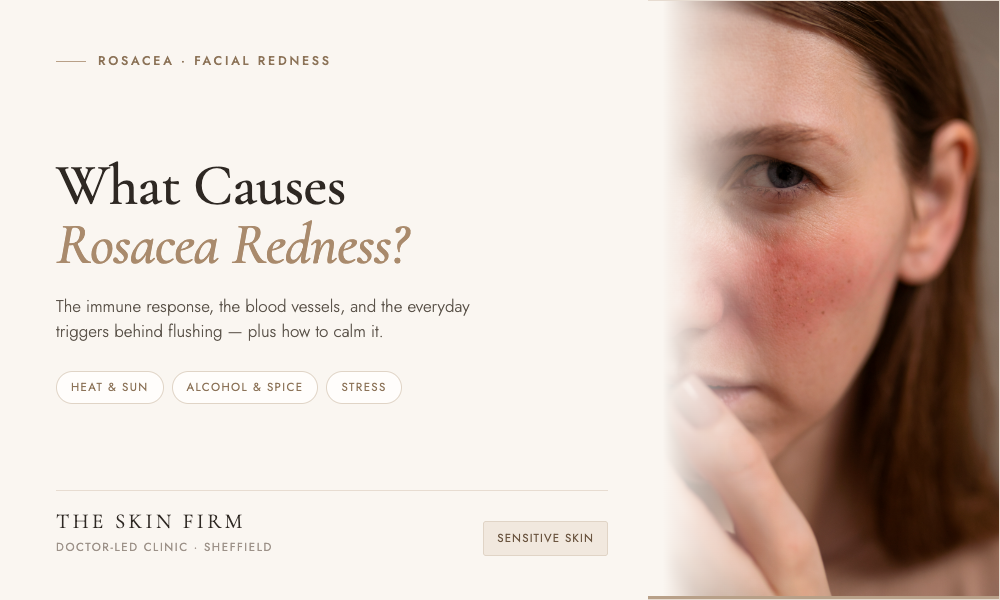
What causes rosacea redness is a mix of three things working together: an overactive immune response in the skin, tiny blood vessels that widen too easily, and everyday triggers that set off flushing. Doctors do not yet know the exact single cause, but these factors explain why the cheeks, nose, and forehead turn red and stay that way.
Rosacea is a long-term skin condition that affects around one in ten adults in the UK. It is most common in people with fair skin, and it often starts between the ages of 30 and 50. The redness can come and go at first, then become more constant over time if triggers are not managed.
The guide below discusses what causes the redness, what triggers it, which foods exacerbate the problem, why the face flushes, and measures that will ease the problem. There is currently no cure for rosacea; however, most people can manage the condition with the proper care.
Key Takeaways
- Rosacea redness comes from an overactive immune system, widened blood vessels, and common triggers.
- The exact cause is unknown, but genetics, sun damage, skin mites and a weak skin barrier all play a part.
- Heat, sunlight, alcohol, spicy food and stress are among the most common triggers.
- A GP or skin doctor should diagnose rosacea, as some cases need prescription treatment.
What Causes Rosacea Redness
The short answer is that several things happen at once in rosacea-prone skin. Each one adds to the redness you see on the face.
Researchers point to a handful of key factors:
None of these work alone. Instead, they build on each other. A person with the genes for rosacea, plenty of Demodex mites and years of sun exposure will have skin that reddens far more easily than skin without these factors.
What Does Rosacea Redness on the Face Look Like?
Rosacea redness on the face has a fairly clear pattern. It usually sits on the central face (the cheeks, nose, chin and forehead) and it tends to spare the skin around the eyes.
Common signs include:
- Lasting redness across the cheeks and nose, a bit like a permanent blush.
- Flushing that comes on suddenly and then fades.
- Small, thread-like blood vessels that become visible on the skin.
- Bumps and spots that can look like acne, but without blackheads.
- A warm, stinging or burning feeling in the affected areas.
- Dry, rough or sensitive patches that react to many products.
Rosacea also shows up in different ways from person to person. Some people mostly get redness and flushing. Others get more bumps and spots, or thickened skin on the nose; a few notice sore, gritty eyes, which is known as ocular rosacea. Because rosacea-prone skin reacts so easily, gentle care matters far more than strong products.
Struggling With Facial Redness That Won't Settle?
Skin that is prone to rosacea requires a cautious and thoughtful strategy rather than using any kind of product. Our team of dermatologists will help you develop a plan tailored to your skin needs.
Common Rosacea Triggers
Rosacea triggers are things that set off flushing or make the redness worse. They do not cause rosacea on their own, but they push already-sensitive skin into a flare. Most people find they have a personal set of triggers.
The most common rosacea triggers include:
- Heat: hot weather, saunas, hot baths and warm rooms.
- Sunlight: one of the biggest triggers of all, even on cloudy days.
- Alcohol: especially red wine and spirits.
- Spicy food: chilli, curry and hot sauces.
- Hot drinks: tea and coffee served very hot.
- Cold and wind: sharp cold air and harsh winds.
- Stress and strong emotion: such as worry, tension or anger.
- Exercise: hard, sweaty workouts that raise body heat.
- Harsh skincare: strong scrubs, alcohol-based toners and fragranced products.
What Causes Rosacea Flare-Ups?
A flare-up is a sudden spell where the redness, flushing or bumps get worse for a while. So what causes rosacea flare-ups to appear when they do? In simple terms, a trigger tips already-reactive skin over the edge.
Here is what happens during a flare:
- A trigger, say heat or alcohol, signals the blood vessels to widen.
- More blood rushes to the surface, so the skin looks redder and feels warm.
- The immune system adds inflammation, which can bring swelling and bumps.
- Once the trigger fades, the skin usually calms, but repeated flares can leave lasting redness.
Flare-ups vary a lot. Some last minutes, others last days. Over time, frequent flares can make the redness more permanent and cause more visible blood vessels. This is why managing triggers early is so helpful. The goal is fewer and milder flares, so the skin has time to settle between them.
Foods That Trigger Rosacea
While diet is not the cause of the condition, some foods may trigger a flare-up in some people. These foods and drinks act as triggers due to increased body temperature and/or changes in blood flow to the skin.
Foods and drinks that often trigger rosacea include:
- Alcohol, with red wine a frequent culprit.
- Spicy foods such as chilli, curry and hot peppers.
- Hot drinks like tea and coffee served piping hot.
- Histamine-rich or fermented foods, such as aged cheese, cured meats and some wines.
- Certain vegetables, including tomatoes and hot peppers, for some people.
- Citrus fruits, which can irritate sensitive skin in some cases.
It is worth saying that triggers are personal. A food that flares one person's skin may do nothing to another's. A simple food and drink diary helps here. Note what you eat and drink, then track how your skin looks that day. After a few weeks, clear patterns often appear, and you can gently cut back on the foods that affect you most.
Not Sure What's Triggering Your Redness?
Guessing at triggers can be slow and frustrating. A doctor-led skin assessment at The Skin Firm looks at your skin, routine and lifestyle to help you find what settles your redness.
Why Does Rosacea Cause Flushing?
Rosacea flushing causes a lot of worry, because it can feel like the face lights up with no warning. Flushing happens because the blood vessels and nerves in rosacea-prone skin do not work in the usual way.
In healthy skin, blood vessels widen and narrow in a steady, controlled way. In rosacea, the vessels are more sensitive and reactive. When a trigger arrives (heat, spice, emotion, or exercise), the nerves signal the vessels to open wide and fast. Blood floods the surface, and the face flushes red and warm.
At first, this flushing fades once the trigger passes. But if it happens again and again, the vessels can stay dilated. Over time, this leads to redness that no longer settles, along with the thread-like vessels many people with rosacea notice. Protecting the skin from triggers helps keep the flushing under control.
What Makes Rosacea Worse?
Beyond single triggers, some habits and factors slowly make rosacea worse. Knowing what makes rosacea worse helps you avoid the things that keep skin inflamed.
Common things that make rosacea worse over time include:
- Skipping sun protection. Unprotected sun exposure is one of the biggest drivers of worsening redness.
- Harsh or over-active skincare. Strong exfoliants, scrubs and high-strength acids can strip the skin barrier and trigger flares.
- Very hot water. Hot showers, baths and steam widen blood vessels and add heat to the skin.
- Ignoring triggers. Regular exposure to known triggers keeps the skin in a constant flare.
- Fragranced products. Perfumes and strongly scented creams often irritate reactive skin.
- Untreated rosacea. Left unmanaged, rosacea tends to get worse, not better, so early advice matters.
The good news is that most of these are within your control. Gentle daily care, sun protection and trigger awareness can slow rosacea down and keep the skin calmer.
How to Reduce Rosacea Redness
Learning how to reduce rosacea redness comes down to a calm, steady routine rather than quick fixes. The aim is to soothe the skin, protect the barrier and avoid the triggers that spark flares.
Simple steps that help reduce rosacea redness include:
- Use a gentle, fragrance-free cleanser. Wash with lukewarm water (never hot) and pat the skin dry.
- Moisturise every day. A fragrance-free moisturiser supports the skin barrier and reduces sensitivity.
- Wear broad-spectrum SPF daily. Sun protection is one of the most important steps, even in winter.
- Avoid your known triggers. Cut back on the foods, drinks and habits that flush your skin.
- Keep skincare simple. Skip harsh scrubs, strong acids and anything that stings.
- Handle stress where you can. Rest, gentle exercise and calm routines help reduce flares.
For redness-prone skin, a professional skin assessment can guide the right routine and rule out anything that might make things worse. Some in-clinic options, such as a carefully chosen chemical peel, may suit some people, but only after a professional review, because the wrong peel can trigger a flare in sensitive skin. It is also important to see a GP or skin doctor for a proper diagnosis. Because rosacea is a medical condition, some cases need prescription treatment that only a doctor can provide. And because much of what causes rosacea redness comes down to triggers you can influence, small daily changes often add up to calmer, steadier skin over time.
Conclusion
Understanding what causes rosacea redness helps you take back some control. The redness comes from an overactive immune response, blood vessels that widen too easily, and everyday triggers like heat, sun, alcohol and spicy food. The exact cause is still unknown, but genes, sun damage, skin mites, and a weak skin barrier all contribute.
Rosacea is a long-term condition, so the goal is to manage and calm the redness rather than expect a cure. Gentle daily skincare, faithful sun protection and knowing your own triggers make a real difference. A proper diagnosis from a GP or skin doctor is important too, as some cases need prescription treatment.
If persistent facial redness becomes a problem, consider booking an appointment with a medical professional at The Skin Firm in Sheffield to discuss skin conditions and develop a treatment plan based on your triggers. The NHS rosacea guide provides information about the condition.
Start Your Journey
Book Your Free Consultation Today
Frequently Asked Questions
Can rosacea redness go away on its own?
Rosacea redness may fade for a while, but it usually returns because rosacea is a long-term condition. With gentle care, sun protection and trigger control, many people keep the redness mild and settled for long stretches.
What is the main cause of rosacea redness?
There is no single main cause. Rosacea redness comes from a mix of an overactive immune response, blood vessels that widen too easily, skin mites, a weak skin barrier and genes. Everyday triggers then make the redness flare.
Can stress cause rosacea flare-ups?
Yes. Stress and strong emotion are common triggers. They can signal the blood vessels to widen, which brings on flushing and redness. Calm routines, rest and gentle exercise can help lower the number of flares.
What foods should you avoid with rosacea?
Common trigger foods include alcohol, spicy dishes, very hot drinks and some fermented or histamine-rich foods. Triggers are personal, though, so a food diary is a reliable way to find the ones that affect your own skin.
Is rosacea redness permanent?
Over time, it could also become more severe if flare-ups occur frequently without treatment. Early management and avoiding triggers can help prevent redness from becoming permanent.
Does sunscreen help rosacea redness?
Yes. The sun is one of the top triggers, which means using an SPF daily is an effective measure. Using a sunscreen that is specially formulated for sensitive skin is usually a good choice.
When should you see a doctor about rosacea?
See a GP or skin doctor if the redness is spreading, not settling, or affecting your eyes. Rosacea is a medical condition, and some cases need prescription treatment that only a doctor can provide.