Table of Contents
The primary advantages of using a skin peel are clearer skin, reduced pigmentation, and increased skin smoothness and brightness. This procedure involves applying an acid solution to remove dull and damaged cells. New skin is produced as a result of the process. The skin peel technique is used to diminish fine lines, treat breakouts, and normalise patchy pigmentation.
Most patients who come for skin rejuvenation ask about the actual effects of the peel procedure. In brief, it enhances the natural cycle of your skin renewal. Dull, pigmented, and congested cells are removed. Underneath, there will be fresh skin. Better results are achieved when a patient uses sun protection and a medical-grade skincare regimen.
Key Takeaways
- Breaks down dead skin cells to expose new, glowing skin.
- Effective treatment for dark spots, wrinkles, and clogged pores.
- Gets the maximum results in a series of treatments.
- Daily sunscreen application is required to protect new skin from discolouration.
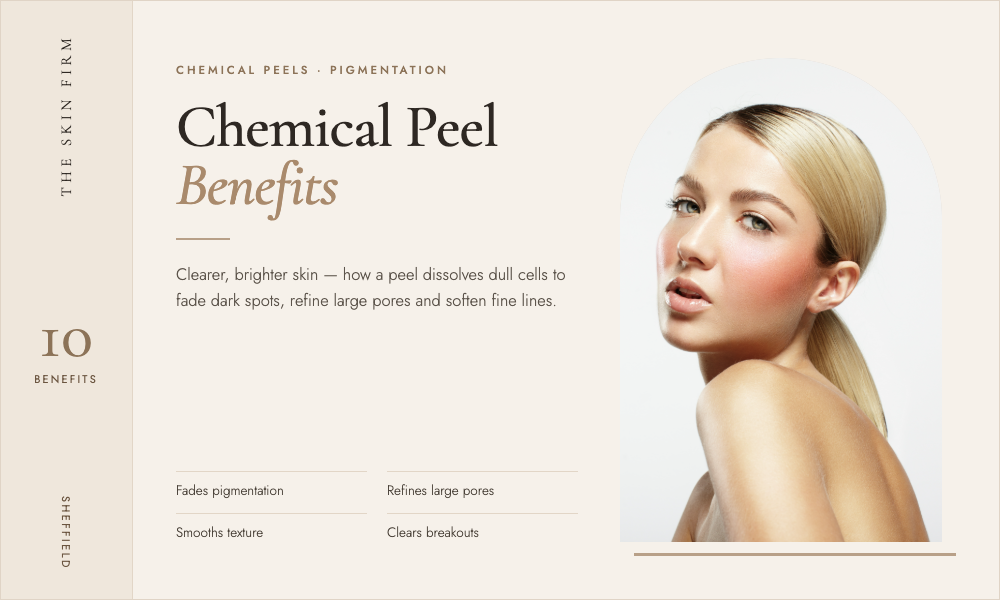
The Top 10 Benefits of Chemical Peels
There are many visible changes that patients undergo after a peeling treatment session. These include the following:
Fades Hyperpigmentation and Dark Spots
Peels help reduce hyperpigmentation in the skin. The chemicals used dissolve the uppermost layer of skin that has been discoloured from acne or sunspots.
Smooths Uneven Skin Texture
Exfoliating helps remove dull patches, revealing newer, healthier skin tones. Patients can observe a softer texture once they strip away the old skin.
Brightens a Dull Complexion
By removing dead skin cells on the surface, the face becomes instantly brighter and more alive. The chemical peel works fast by removing environmental dirt that makes the skin look dull and lifeless.
Reduces the Appearance of Large Pores
A chemical peel for large pores can deliver great results in refining the skin. The chemical formula helps dissolve clogged oil and debris, making stretched-out pores contract back to normal size.
Softens Fine Lines and Wrinkles
The procedure stimulates rapid cell renewal, helping fill fine lines and wrinkles and making the skin more compact. It does this by removing the damaged layer of skin cells and letting the healthy ones take over.
Helps Clear Active Acne Breakouts
The light chemical peel helps treat acne breakouts, unclog pores, and reduce inflammation.
Improves Skincare Product Absorption
By clearing away the dead surface layer, everyday medical-grade serums and moisturisers penetrate much deeper into the skin. This allows your daily skincare routine to perform much more effectively and deliver faster results.
Struggling With Uneven Skin Tone and Texture?
Dull skin and dark spots easily mask your natural complexion. The expert practitioners carefully assess your skin type to provide a targeted, safe peeling treatment.
Evens Out General Skin Tone
Regular treatments actively blend away blotchy patches to create a highly consistent, clear canvas. Patients find they need far less make-up to hide redness or general discolouration after a course of peels.
Manages Melasma Safely
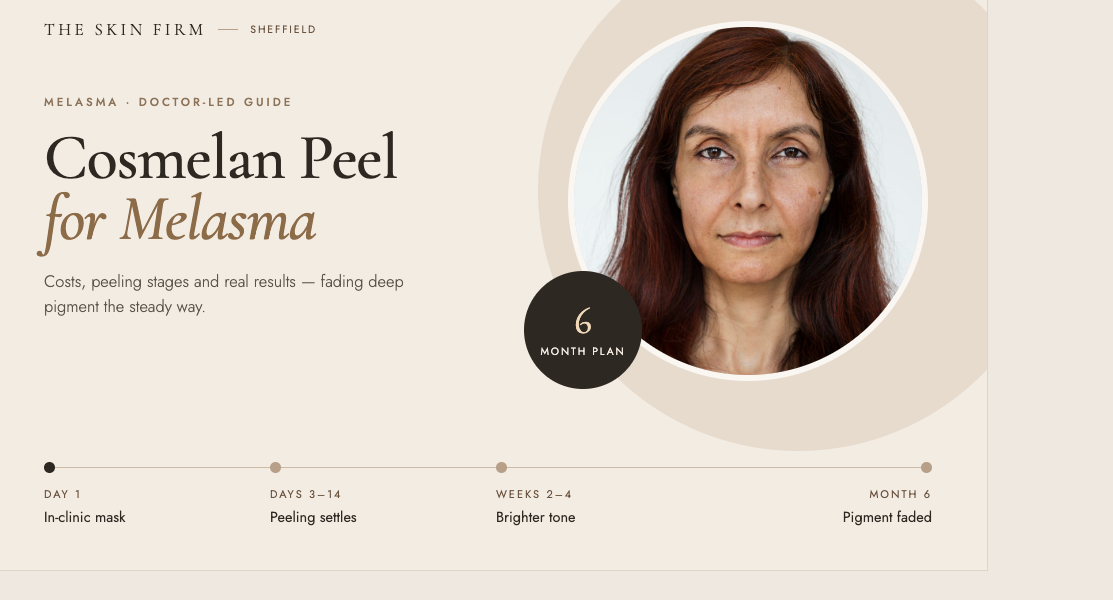
When practitioners use specialised depigmenting treatments, such as Cosmelan, they can safely control the deep melanin production that causes melasma. These advanced peels safely and effectively target hormonal pigmentation.
Delivers Long-Lasting Rejuvenation
The effect is due to increased collagen production and new cell growth that can last from several months to more than a year. Patients maintain their glowing results through an at-home medical-grade skincare regimen.
Benefits of Chemical Peel on Face
We most often perform our peels on the face, since this area receives the most sun exposure, pollution, and makeup application. The earliest signs of hyperpigmentation, congestion, and fine lines will be noticed there.
- Forehead and cheeks: These are where most sun damage appears as flat brown spots. A superficial peel is what will slowly get rid of them.
- Nose and chin: The oiliest parts of the face are right here. Blackheads and large pores appear. Salicylic acid will work excellently since it is oil-based and can penetrate the pore.
- Mouth and eye area: Since the skin in this area is very thin and constantly moving, fine lines appear early. A mild peel will soften them, but deep lines will require some other procedure.
- Jawline: Hormonal acne appears right there. Peels will help prevent this problem in between outbursts.
Facial skin is also thinner and more reactive than skin on the body. That is why the strength and the acid type matter so much. A practitioner will look at your skin tone, your history of pigmentation, and how your skin has reacted to acids before. They then choose the depth to suit you.
What Does a Chemical Peel Do?
A chemical peel is an aggressive process that helps improve the skin condition and appearance. The practitioner first cleans the face, then applies specific chemicals. These acids weaken the connection between old, pigmented skin cells. Then, over several days, this layer falls off. New skin regenerates beneath it, distributing pigment evenly. Light peels like glycolic acid act on the superficial layer of the epidermis, whereas medium peels go deeper into the skin.
Are Chemical Peels Good for Your Skin?
Yes, when performed by an experienced professional, chemical peels are safe and beneficial for the skin. Are chemical peels good for your skin? Indeed, they help the skin shed old cells and produce new, healthy ones. Medical professionals use various chemicals to suit different skin types safely. Light peels exfoliate the skin, and medium peels help with prominent spots. For the more serious cases, such as melasma, they employ special depigmenting techniques, such as Cosmelan.
Do Chemical Peels Work?
Yes, for mild to moderate discolouration and texture problems, results are usually good.
Three things shape the outcome. First, the type of pigmentation you have. Second, your skin type. Third, how closely you follow the aftercare.
Applying sunscreen daily is mandatory. Newly formed skin burns easily, and exposure to sunlight without protection will bring the pigment right back. Hormonally driven pigment requires an organised treatment program.
What Chemical Peel Results Can You Expect?
Results depend on the strength used.
After a superficial treatment, most patients see a brighter, smoother complexion within days, with only light flaking. After a medium-depth treatment, expect visible peeling and mild redness for a few days. Sun spots and uneven tone then look noticeably better.
For the best chemical peel results, complete the full course your practitioner recommends. One session gives a glow. A course changes the pigment. Results vary between individuals.
Need a Reliable Solution for Stubborn Pigmentation?
Standard skincare products often fail to clear deep dark marks. A professional skin assessment pinpoints the exact cause of your pigmentation and matches it to a safe, medical-grade plan.
Chemical Peel for Large Pores
A chemical peel for large pores can give visible refinement.
Pores look larger when they are clogged with dead skin cells and excess oil. The wall stretches, and the opening looks wider. Peeling dissolves that debris and clears the blockage. Once the pore empties, it draws back closer to its natural size.
Pore size is partly genetic, so the aim is refinement rather than removal. Regular treatment and a good home routine keep them clear.
How Often Should You Get a Chemical Peel?
It depends on your skin type and the strength of the treatment.
For pigmentation and texture, most people need three to six sessions, spaced two to four weeks apart. After that initial course, a light maintenance peel every few months helps hold the results.
Your practitioner will set the spacing for you. Going too often can irritate the skin.
Conclusion
In conclusion, the advantages of chemical peels include the safe removal of dead or damaged skin, resulting in fresher-looking skin. With quick exfoliation, problems like hyperpigmentation and pore cleansing can be addressed easily.
The experienced medical team at The Skin Firm offers expert, doctor-led chemical peels in Sheffield to help fade pigmentation and restore a clearer, healthier-looking complexion.
Frequently Asked Questions
Does a chemical peel hurt?
Patients experience a slight tingling or warming sensation during the procedure, but therapists always monitor the skin so it does not become uncomfortable.
How long does peeling last?
Mild scaling or peeling usually lasts for three to five days, particularly following medium-strength peels. Patients must keep the skin well moisturised and never pick the flaking skin.
Can a chemical peel treat melasma?
Although a regular peel can help improve symptoms, melasma is very difficult to treat because it is hormone-related. Medical practitioners usually recommend depigmentation procedures such as Cosmelan, which can safely manage the overproduction of melanin which causes the patches.
Are chemical peels safe for darker skin tones?
Yes, chemical peels are safe on dark skin as long as the correct acids are used. People with dark skin should avoid certain peels, as they can stimulate the production of extra pigment in the skin.
How should I care for my skin after a treatment?
Following a peel, patients must apply a high-quality sunscreen every day and strictly avoid direct sun exposure. Medical experts advise keeping the skin well moisturised and stopping the use of harsh scrubs or active retinoids until the face fully heals.
How long do the results of a chemical peel last?
These changes can be permanent for a few months or even a year, depending on the type of peel and the person's lifestyle. People maintain their improvements by using specialised skincare techniques and regularly performing maintenance peels.