
Table of Contents
Chemical peel side effects are mild and settle within a few days. Redness, dryness, tightness and light flaking are normal parts of skin recovery. A small number of reactions are not. Pus, a fever, worsening pain after 48 hours, spreading redness, or new dark patches all require urgent medical review.
The difference matters. Early action stops a minor problem from becoming a scar or a lasting change in skin colour. This guide explains what to expect, what not to expect, and when to act.
Key Takeaways
- Redness, tightness, and flaking go away within 3 to 7 days after a light peel.
- Pus, fever, spreading redness or pain worsening after 48 hours need same-day medical advice.
- The deeper the peel, the bigger the risk.
- Darker skin tones face a higher chance of pigment change.
- A good practitioner, a proper skin check and good aftercare lower your risk.
Warning Signs That Need Same-Day Advice
Normal healing improves every day. A complication does the opposite. Contact your practitioner the same day if you notice:
- Pain that worsens after 48 hours. It should be easing off by then.
- Yellow or green discharge. Any pus points to infection.
- A foul smell from the treated skin.
- Fever or chills, which suggest a wider infection.
- Skin that feels hot to the touch, or redness that spreads beyond the treated area.
- Blisters or open sores, which may signal a cold sore flare or a chemical peel burn.
- New dark patches, or pale patches where colour has been lost.
Do not wait to see if these settle. Infection and burns respond well to early treatment and badly to delay.
What Causes Chemical Peel Side Effects?
A peel works through controlled injury. An acid solution lifts away the dead surface layer, and your body treats this as a wound. Next comes inflammation, which results in stiffness and redness. When that reaction goes too far, or microorganisms penetrate the skin before the barrier recovers, issues arise.
Normal Chemical Peel Side Effects You Can Expect
These reactions show the treatment worked. No medical attention needed.
- Redness: Like mild sunburn. Hours after a light peel, days after a medium one.
- Tightness and dryness: Skin feels stiff before the old layer sheds.
- Flaking: Starts on day two or three, and light peels finish by day five.
- Mild stinging: A warm, prickly feeling in the first hour or two.
- Slight swelling: Most often around the eyes after a medium peel.
- Temporary darkening: Brown marks look darker before they flake away.
Give it a few days. The rough stage is part of the process.
How Peel Depth Changes Chemical Peel Risks
| Side Effect | Superficial | Medium | Deep |
|---|---|---|---|
| Redness | Hours | Days to a week | Weeks to months |
| Peeling | 2 to 3 days | 5 to 7 days | 7 to 14 days |
| Swelling | Minimal | Moderate | Significant |
| Pigment change | Very rare | Low, temporary | Higher, can be permanent |
| Scarring | Extremely rare | Rare | Uncommon but recognised |
| Infection | Very rare | Low | Significant |
The NHS notes that after a deep peel, swelling can last two weeks and redness up to three months. Deep peels use phenol, which can affect the heart and kidneys. Most UK clinic peels are superficial or light-to-medium-depth, and these carry the lowest risk.
Worried Your Skin Is Not Settling the Way It Should?
Uncertainty after a peel is stressful, and internet advice rarely helps.
- Face-to-face review by a GMC-registered doctor, not a text reply.
- Clear answers on whether your reaction is expected or a red flag.
- A recovery plan matched to your skin tone and peel depth.
Hyperpigmentation After Chemical Peel
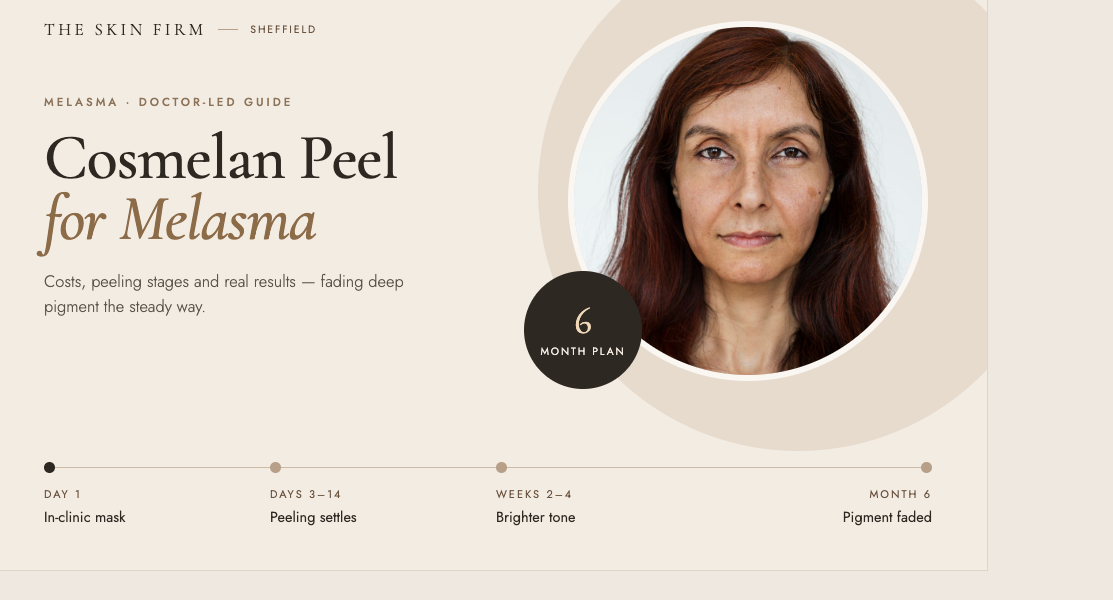
Hyperpigmentation after chemical peel treatment is one of the most common and preventable complications. Inflamed skin overproduces pigment, which shows up as brown or grey patches.
Risk climbs sharply if you:
- Have Fitzpatrick skin type IV, V or VI.
- Forget using sunscreen while you are recovering.
- Pick or scrub at flaking skin.
- Have a peel that is too intense for your skin tone.
Hypopigmentation is the opposite: a loss of colour that leaves pale patches, and it is often permanent. For deeper skin tones, safe practice means starting with gentler acids and a series of light peels rather than a single aggressive session.
Cold Sore Flare-Ups After a Peel
Once you have had a cold sore, the virus behind it never fully leaves. It just goes quiet. A peel can wake it up, and blisters then appear around the mouth or across treated skin. Tell your practitioner about any history of cold sores first. Antiviral medication before and after treatment cuts that risk.
Who Should Not Have a Chemical Peel
Your practitioner should rule out the following first:
- Recent isotretinoin use. Most clinics ask for a six-month gap.
- An active infection, such as cold sores, impetigo, or an open wound.
- Eczema, psoriasis or rosacea flares on the face.
- Pregnancy or breastfeeding, as many peel agents lack safety data.
- A history of keloid scars.
- Recent sunburn, laser, waxing or strong retinoid use.
- Anyone under 18.
Full disclosure of medication and skin history helps your practitioner make safe choices.
Not Sure Whether Your Skin Type Suits a Peel?
The wrong peel on the wrong skin causes the very problem you wanted to fix.
- Fitzpatrick skin type assessment before treatment is agreed.
- Peel strength matched to your skin, not a one-size-fits-all protocol.
- Honest advice when a peel is not right for you.
How to Reduce the Side Effects of Chemical Peel on Face Treatments
Before Your Peel
- Choose a practitioner on a recognised UK register, such as JCCP or Save Face.
- Disclose all medication and past skin treatments.
- Stop retinoids and acids for the period your clinic advises.
- Avoid sun exposure and sunbeds for two weeks.
After Your Peel
- Cleanse with lukewarm water and clean fingertips for two days.
- Apply a bland, fragrance-free moisturiser whenever skin feels tight.
- Wear SPF 50 broad spectrum every morning, even in winter.
- Leave flaking skin alone. Never pick or scrub it away.
- While your skin heals, avoid the pool, sauna, steam room, and gym.
- Hold off on retinol, vitamin C, and acids until it clears.
Sun protection matters more than any other step.
What to Do If a Chemical Peel Goes Wrong
A chemical peel gone wrong is rare with a trained professional. If something does not feel right:
- Stop all active skincare. Use only water and a plain moisturiser.
- Contact the practitioner who treated you. They know the solution used.
- Photograph the area daily so any clinician can see the change.
- See your GP or attend A&E if you cannot reach them and you have a fever, spreading redness or severe pain.
- Report the reaction through the MHRA Yellow Card Scheme.
- Do not accept reassurance by text message.
Long-Term Side Effects of Chemical Peel Treatments
Long-term side effects of chemical peel treatments are uncommon when peels are spaced sensibly. Common causes include repeated aggressive treatment, poor aftercare, or peels too deep for your skin type.
- Damage to the barrier. Overtreated skin turns chronically dry and reactive.
- Permanent pigment change, as hypopigmentation rarely reverses.
- Scarring, usually linked to infection or picking.
- Lasting sun sensitivity.
Conclusion
Most chemical peel side effects are temporary and resolve on their own. The ones you should never ignore are those that worsen instead of improve, and they need same-day medical advice.
Safe outcomes come down to an honest skin assessment, a properly trained practitioner, and close aftercare. If you are concerned about how your skin has reacted, speak to a doctor in person. Dr Naren Senthil Nathan and the team at The Skin Firm offer chemical peels in Sheffield with a full assessment before any peel is agreed.
Frequently Asked Questions
Are chemical peels safe?
Yes, as long as the person doing it is trained. Stronger peels carry more risk, and so does anyone who has not been properly trained.
How long do chemical peel side effects last?
Light peels settle in three to seven days. Medium peels take one to two weeks. Deep peels are slower. You need at least two weeks, and redness can linger for months after that.
Can a chemical peel permanently damage your skin?
Rare but possible. Hypopigmentation and scarring are the main risks, and both are mostly linked to deep peels.
What are the signs of an infection after a chemical peel?
Pain that worsens after 48 hours, discharge, a foul smell, heat, spreading redness, or fever. Normal healing improves daily, while infection gets worse.
Is it normal for skin to look worse after a chemical peel?
Yes. Skin looks worst on days two to four, then improves. Pain, pus, or spreading redness is not normal.
Can you get a burn from a chemical peel?
A chemical peel burn can happen if the solution stays on too long or is too strong for your skin. Signs include blisters, white or grey skin, and severe pain. Seek urgent assessment.