
Table of Contents
A lot of people search for hydrafacial ruined my skin after a facial leaves them red, spotty or sore. In most cases, this is a short-term reaction, not long-term damage. Your skin usually settles down within a few days to two weeks with the right care.
A HydraFacial cleans your skin, lifts off dead skin and adds moisture, all in one session. It works well for many people, but not for everyone. Some skin types react more than others. A few small mistakes before or after the treatment can make things worse.
This guide keeps things simple. You will learn the common side effects, why a treatment can go wrong, and how to tell normal healing from real damage. You will also find easy steps to help your skin heal, and when to see a professional.
Key Takeaways
- Most reactions after a HydraFacial are temporary, such as redness, dryness or small breakouts.
- Purging shows up as quick, small spots. A true reaction is painful, red and lasts longer.
- A HydraFacial can damage the skin barrier if the suction or acids are too strong for your skin.
- Gentle skincare, sun protection, and time help most skin recover within 1 to 4 weeks.
- See a qualified clinician if redness, pain, or swelling does not settle or starts to worsen.
Can a HydraFacial Damage Your Skin?
For most people, the answer is no. A HydraFacial is gentle and safe when performed by a trained professional. But in some cases, a HydraFacial can damage your skin.
It is more likely when:
- The suction is set too high for your skin.
- The acids are too strong or left on for too long.
- The tools are not clean, which is rare but a real risk with untrained providers.
- You use harsh products straight after the treatment.
- You have a condition such as rosacea, eczema, or active acne.
A proper skin check before any facial can help identify these risks early. It also helps the practitioner adjust the settings to suit your skin.
Why a HydraFacial Can Go Wrong
A hydrafacial gone wrong usually comes down to the wrong settings, the wrong skin type or poor aftercare. The treatment itself is rarely the problem. The way it is completed and what happens next make the difference.
Common reasons a HydraFacial can go wrong include:
- No consultation or patch test before the session.
- Too much exfoliation or suction in one go.
- An allergic or irritant reaction to a serum ingredient.
- Treating skin that is already inflamed, sunburnt or broken.
- DIY kits or unqualified providers using poor technique.
Not Sure If Your Skin Is Healing or Reacting?
A professional skin assessment can tell the difference and set a safe recovery plan. The expert team at The Skin Firm reviews your skin, your history and your products before suggesting any next step.
HydraFacial Side Effects: What's Normal and What's Not
Most hydrafacial side effects are mild and clear up quickly. Knowing the normal ones helps you stay calm and avoid panic-buying products you do not need.
Common, Short-Term Effects
- Redness after a HydraFacial: It is the most common effect. It usually fades within a few hours, and sometimes by the next morning.
- Mild tightness or tingling: Your skin may feel tight or buzz slightly after the serums and exfoliation.
- Light dryness or flaking: As old skin sheds, you may notice a little peeling for a day or two.
- More sun sensitivity: Fresh skin can react more strongly to UV light for a short while.
These are signs your skin is adjusting, not signs that something is wrong.
Breakouts After a HydraFacial: Purging or Reaction?
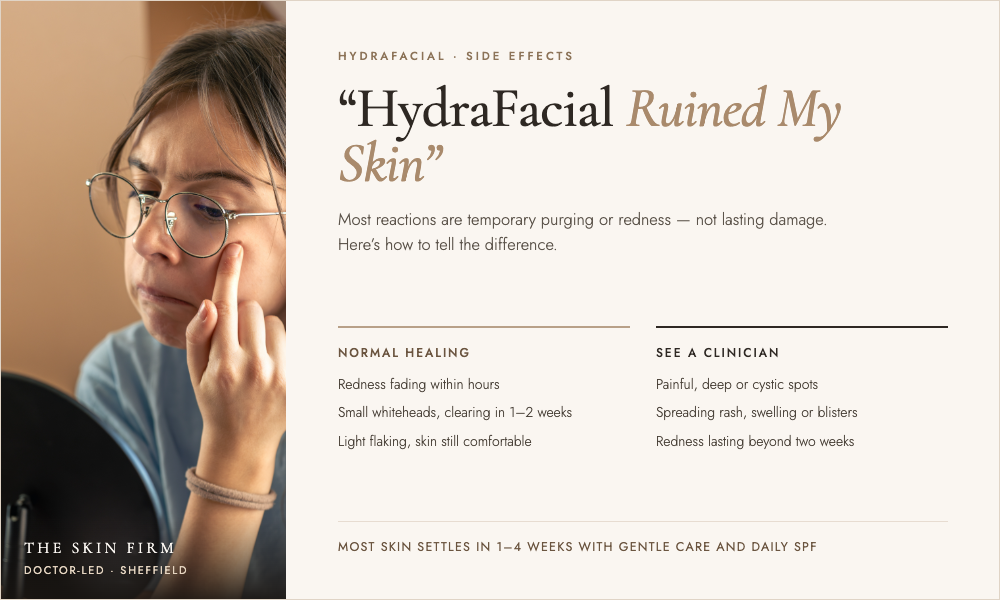
Breakouts after a hydrafacial worry many people. The key is to distinguish between normal hydrafacial purging and a true reaction. They look and feel different.
Purging (normal)
- Small whiteheads or spots.
- Spots that appear in the first few days.
- Breakouts that clear within one to two weeks.
- Skin that still feels hydrated and comfortable.
A Reaction (not normal)
- Painful, deep or cystic spots.
- Spreading redness, a rash or swelling.
- Breakouts that last longer than two weeks or keep getting worse.
Purging is your skin pushing out trapped oil and debris that the treatment brought up. A reaction means the skin is irritated or the barrier is struggling to cope.
Read More: HydraFacial Aftercare
HydraFacial Skin Barrier Damage: Signs to Watch
The outermost layer of your skin is your skin barrier, and it helps retain moisture while keeping out irritants. If you exfoliate too much or use suction too often, your skin barrier may weaken. Although HydraFacials rarely cause major harm, strong treatment settings or potent post-treatment products can still significantly injure the skin barrier. Watch for these signs of a struggling barrier:
- Skin that feels tight, raw or stings when you apply products.
- Redness that will not calm down.
- Dry, flaky or rough patches.
- More breakouts than usual.
- Skin that reacts to products it used to handle fine.
If you notice these, the answer is to simplify your routine and give the skin time, not to add more active products.
Worried Your Skin Barrier Is Struggling After a Facial?
A clinician can check your barrier and rule out infection or allergy.
You get a simple, calming routine to help the skin repair.
No pressure, just clear advice on safe next steps.
How to Recover If a HydraFacial Ruined Your Skin
If a hydrafacial ruined your skin, the goal is to calm and protect, not to pile on more products. Most skin recovers within one to four weeks when you keep things simple.
Follow these steps:
- Pause all actives: Stop retinol, vitamin C, acids and scrubs for now.
- Keep it simple: Use only a gentle cleanser and a basic moisturiser.
- Repair the barrier: Choose products containing ceramides, hyaluronic acid, or niacinamide.
- Protect from the sun: Wear SPF 30 or higher every single day.
- Do not pick: Squeezing spots can lead to scarring and more redness.
- Give it time: Let the skin settle fully before booking any new treatment.
If your skin does not improve or gets worse, it is time to seek a professional opinion.
When to See a Professional
Most reactions settle at home with patience. But some signs need expert help, and quickly.
See a clinician if you have:
- Pain, swelling or heat that keeps getting worse.
- A spreading rash or blisters.
- Pus, crusting or other signs of infection.
- Redness or breakouts that last more than a few weeks.
Conclusion
If you have had a hydrafacial and feel there has been any skin damage to your face, try not to panic; most of the time, these skin changes are temporary and will heal on their own with care.
It helps to know that mild redness and/or light purging are generally expected after a hydrafacial, as they are both fairly common side effects that typically disappear within 2 to 3 days. If you experience ongoing discomfort, swelling, or redness across your face, you may be having a true reaction to the HydraFacial or a skin barrier issue. You should seek medical attention if these symptoms persist.
A proper skin assessment is the safest way forward after any reaction. The expert team at The Skin Firm offer doctor-led facials and a thorough skin consultation in Sheffield to help calm the skin and plan safe, suitable treatments for your skin type.
Frequently Asked Questions
How long do hydrafacial side effects last?
Most hydrafacial side effects, such as redness, tightness or mild dryness, last from a few hours to two or three days. Small breakouts from purging can take 1 to 2 weeks to fully clear.
Is it normal to have breakouts after a HydraFacial?
Mild breakouts can actually be normal after a hydrafacial. Your skin might be purging trapped gunk, which comes out as little spots. They tend to disappear fast if you are gentle with your skin.
Why is my face red after a HydraFacial?
Redness after a HydraFacial comes from the suction and exfoliation, which boost blood flow to the skin. This pinkness is normal and usually fades within a few hours. Redness that lingers for days may mean your skin is irritated.
Can a HydraFacial damage your skin barrier?
It can, although it is uncommon. Hydrafacial skin barrier damage is more likely with very strong suction, harsh acids or aggressive aftercare. Signs include stinging, lasting redness and skin that reacts to gentle products.
What should I do if my HydraFacial went wrong?
Stop using active products, switch to a gentle cleanser and moisturiser, and protect your skin with daily SPF. If you have pain, swelling, a spreading rash or signs of infection, see a qualified clinician for a proper assessment.